If your TAM is wrong, everything downstream breaks
Most companies don't have a demand problem.
They have a market sizing problem.
They overestimate how big their market is, underestimate how hard it is to win, and build pipeline targets on bad assumptions.
Then they wonder why pipeline stalls, CAC creeps up, and revenue misses.
This usually traces back to one thing: your TAM, SAM, and SOM are not grounded in reality.
Quick Definitions: TAM vs SAM vs SOM
Before going deeper, it helps to clearly define the three core market sizing terms:
- TAM (Total Addressable Market) — the total revenue opportunity if you captured 100% of demand in your category.
- SAM (Serviceable Addressable Market) — the portion of the market your product, business model, and constraints can actually serve.
- SOM (Serviceable Obtainable Market) — the realistic share of the market you can capture based on competition, budget, and execution.
Think of it simply: TAM sets the ceiling, SAM defines your focus, and SOM reflects what you can actually win.
What TAM, SAM, and SOM Actually Mean
TAM (Total Addressable Market) is the full revenue opportunity if you captured 100% of demand in your category. It is the ceiling—not a target.
SAM (Serviceable Addressable Market) is the portion of TAM that fits your product, Ideal Customer Profile, and go-to-market constraints. It represents what you can actually serve.
SOM (Serviceable Obtainable Market) is the share you can realistically capture given your current resources, competition, and execution capacity.
Full market demand if you captured 100%
Market that fits your ICP and constraints
What you can realistically capture
SOM is the only number that turns market size into an operating plan.
How to Do TAM Analysis: A Step-by-Step Framework
Most TAM analysis starts with a number from a market research report. That is usually where it goes wrong. Here is how to do it right.
Define your ICP before you size your market
Your ICP is the foundation. Industry, company size, revenue band, org structure, technology environment—get specific. The more precise your ICP, the more accurate your SAM will be. Broad ICP definitions produce inflated market sizes that will not survive contact with sales.
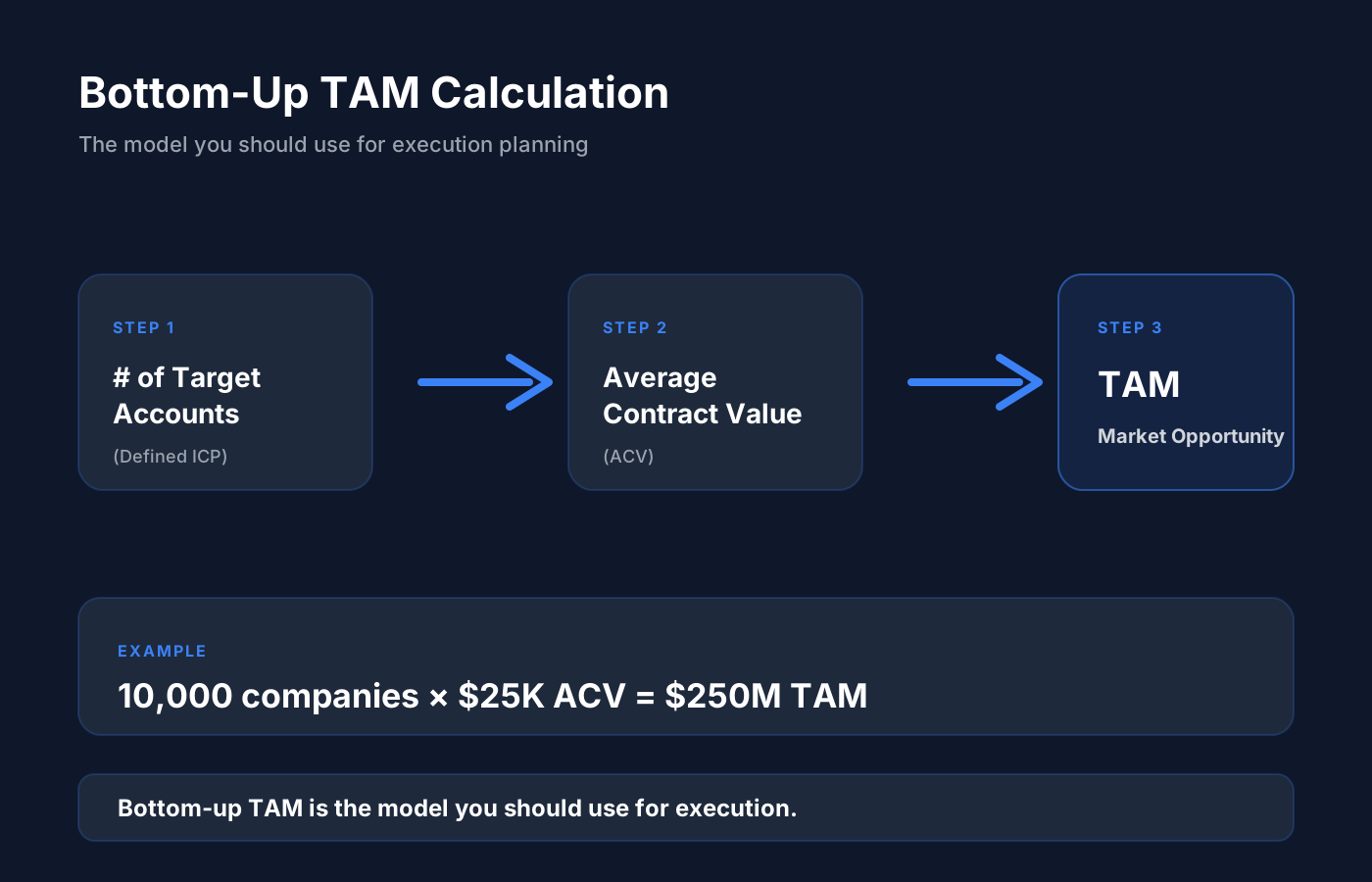
Use bottom-up analysis, not top-down reports
Top-down TAM starts with a market research report and multiplies. Bottom-up TAM starts with your actual ICP—how many companies fit, what your ACV is, and what the realistic penetration looks like. Bottom-up is harder but far more actionable. It gives you a number you can actually defend in a board meeting.
Narrow to SAM by applying real constraints
Filter your TAM by geography, segment, sales motion, and product fit. If your product requires a 500-person sales team to deploy, companies with 10 salespeople are not your SAM. Apply every real constraint your go-to-market model creates.
Estimate SOM based on capacity and competition
Your SOM is your SAM minus competitor-held accounts, minus accounts you cannot reach with current resources, minus accounts where you are not yet competitive. A 3–10% SOM relative to SAM is a realistic starting point for most early-stage B2B companies. If you are claiming 30%, explain how.
Understanding Your Real Market Position
TAM and SAM tell you how big the pool is. Your market position tells you where you stand in it.
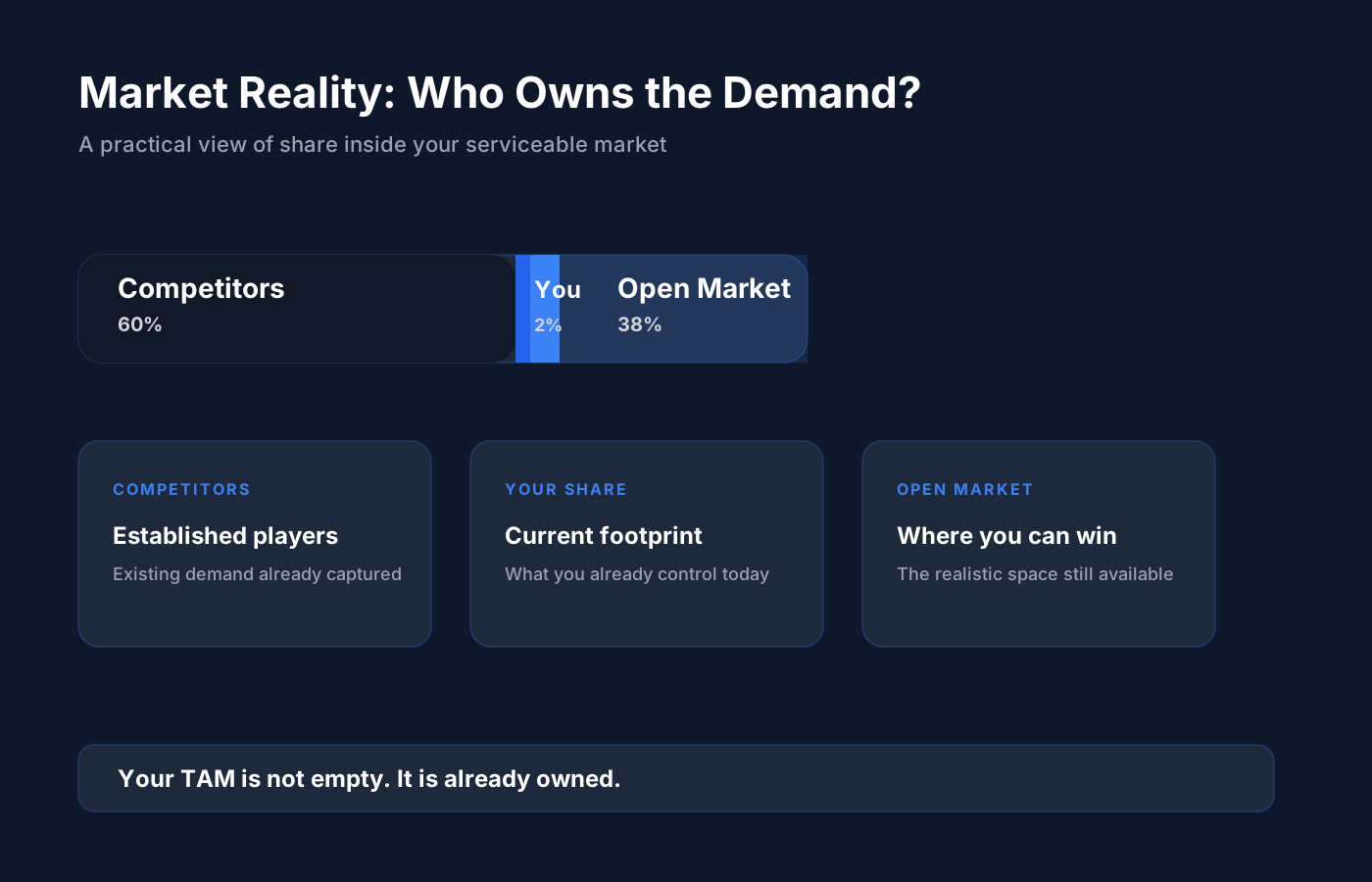
Every market has three segments that matter for GTM planning:
- Competitor-held accounts — companies already using a competing solution. These require displacement, which is a different motion than greenfield selling.
- Your current accounts — your installed base. This is your retention and expansion opportunity, and often the highest-margin revenue you have.
- Open market — companies with the problem you solve who have not yet committed to a solution. This is where acquisition-focused GTM should concentrate.
Most B2B companies underinvest in open-market acquisition because they spend too much time chasing competitor accounts without a real displacement motion. Knowing your market position lets you allocate demand generation investment where it will actually convert — and informs both the marketing leadership model and the outbound targeting strategy best suited to your stage. Outbound operates at the SOM level — your market map tells you exactly where to aim it.
Common Mistakes That Break Your TAM Analysis
Even well-resourced teams get TAM wrong. These are the four patterns that consistently distort market sizing and downstream strategy.
Inflated ICP definitions
Including every company that could theoretically benefit from your product, rather than companies that actually buy it. Without a tightly defined Ideal Customer Profile, SAM becomes too broad and pipeline becomes noisy.
Ignoring competitive reality
Calculating market size as if you are the only option. Competitor-held accounts require a displacement motion. Treating the full SAM as accessible greenfield causes pipeline projections to miss badly.
Treating TAM as a revenue target
TAM is a ceiling, not a forecast. Presenting TAM as a revenue opportunity to the board or investors conflates market size with achievable revenue, which erodes credibility and corrupts planning assumptions.
No connection to execution
Completing a market sizing exercise that never gets connected to pipeline targets, campaign budgets, or sales capacity planning. TAM analysis is only valuable when it feeds a go-to-market strategy grounded in execution — not a slide for a pitch deck.