When to Hire a Fractional CMO vs Full-Time (And What It Actually Costs)
The fractional CMO vs full-time decision isn't about preference. It's about stage, pipeline reality, and execution risk — and getting it wrong costs more than the salary.
11 min readApex GTM
Executive Summary
Most B2B companies hire marketing leadership too early, too late, or the wrong type — and pay for it in lost pipeline.
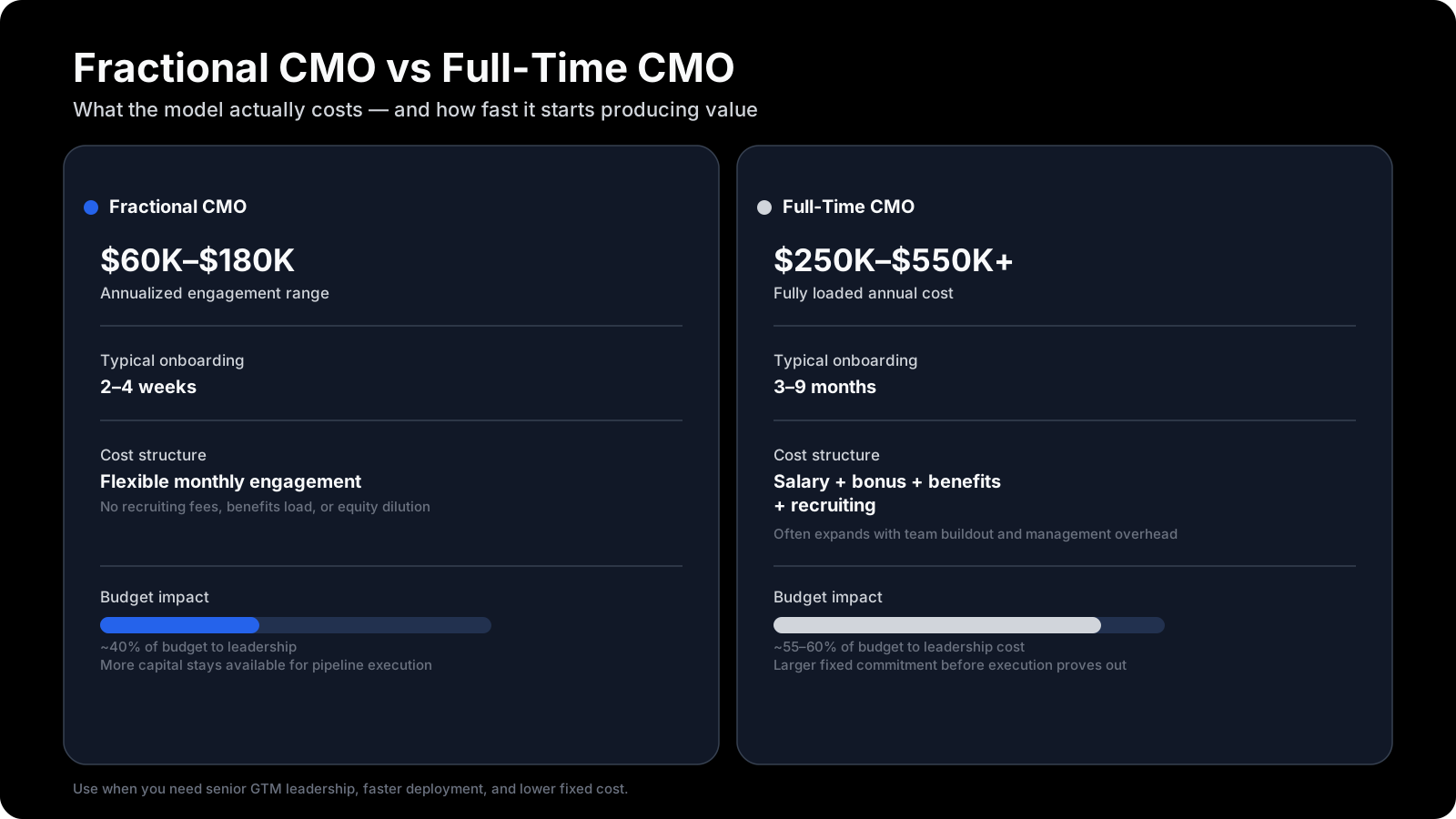
Fractional CMOs typically cost $60K–$180K/year fully loaded. Full-time CMOs cost $300K–$600K+. The gap is real.
The model that fits depends on whether you're building a pipeline system or scaling one.
Pipeline predictability — not headcount — is the deciding variable.
Most companies don't have a marketing problem.
They have a timing problem.
They hire too early, overpay for underutilized leadership, and expect a full-time CMO to fix what is fundamentally a missing revenue system. Or they wait too long — and stall growth because no one owns pipeline, positioning, or execution.
This decision — fractional vs full-time — isn't about preference. It's about stage, economics, and execution risk.
What a CMO Is Actually Responsible For
Before comparing models, get this right.
A CMO is not primarily responsible for campaigns, content, or channels. Those are execution outputs.
Sales and marketing integration — a unified revenue motion
Revenue predictability — not activity, but outcomes
If those aren't being solved, adding headcount won't fix it. That's the foundation for every decision that follows.
Fractional CMO vs Full-Time: The Operator-Level Comparison
Here's how the two models actually compare across the variables that matter:
Variable
Full-Time CMO
Fractional CMO
Base salary
$180K–$300K+
N/A
Fully loaded cost
$250K–$550K+
$60K–$180K/year
Monthly engagement
Fixed overhead
$5K–$15K/month
Time to impact
3–9 months
2–4 weeks
Commitment
Long-term, high fixed cost
Flexible, adjustable
Execution risk
High — wrong hire = expensive reset
Lower — faster iteration
Recruiting cost
20–30% of base salary
None
Best stage
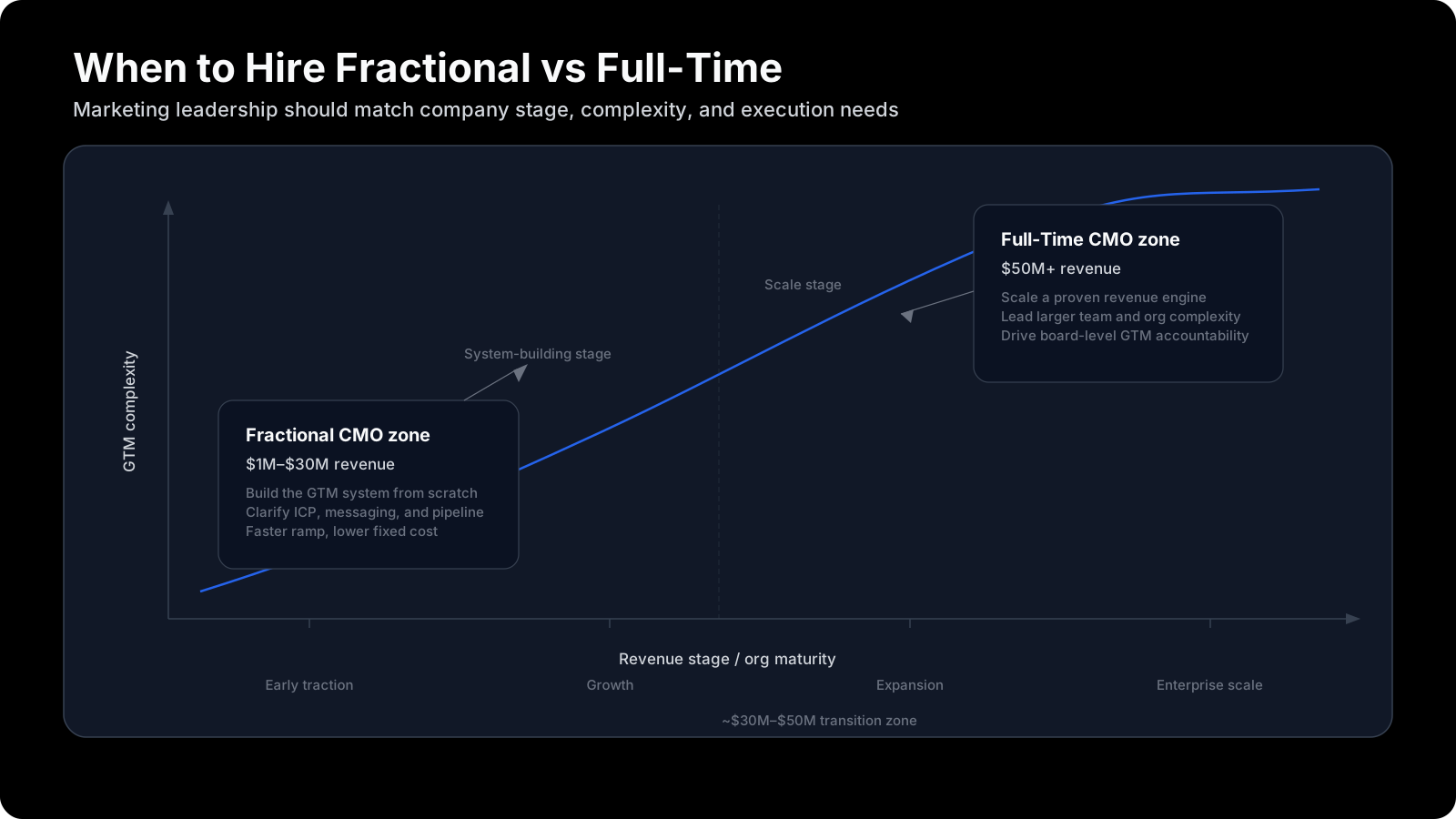
$50M+ revenue, scaling a working system
$1M–$30M, building GTM foundation
In most cases, fractional delivers 40–70% cost savings with significantly faster time to execution. But cost isn't the real story.
The Economics: What You're Actually Paying For
The biggest mistake companies make is comparing salary vs retainer. That's not the real comparison.
Full-Time CMO Cost Stack
Base salary
Bonus and commission
Equity
Benefits and payroll tax
Recruiting fees (20–30% of base)
Onboarding time — three to six months of reduced productivity
→ Real cost: often $300K–$600K+ annually
Fractional CMO Cost Stack
Monthly engagement fee
Zero benefits overhead
Zero recruiting cost
Immediate deployment
→ Real cost: typically $75K–$150K/year equivalent
The Hidden Cost Most Teams Miss
When you hire a full-time CMO too early, they often don't have enough infrastructure to operate effectively. They spend the first two to three months diagnosing, building, and onboarding instead of executing. Then they hire prematurely to compensate.
You're not just paying salary — you're paying for the organizational drag of a leader operating without a functioning system underneath them.
When to Hire a Fractional CMO
Fractional is not a downgrade. It's the optimal model for most B2B companies still building toward scale.
1
You're between $1M–$30M in revenue
You need leadership — not a large team. You're still building your GTM foundation and don't yet have the organizational infrastructure to support a fully loaded executive hire.
2
Your pipeline is inconsistent or unpredictable
Demand exists, but conversion is weak. Channels are fragmented. There's no unified acquisition strategy. This is a system problem, not a headcount problem.
3
You don't have a defined GTM system
Your ICP is unclear, messaging is inconsistent, and you don't have a repeatable acquisition engine. A fractional leader builds this — without the fixed cost of doing it at full-time salary.
4
You need speed, not headcount
You can't wait six months for ramp. You need execution now. Fractional operators come with existing frameworks and can deploy in weeks, not quarters.
At this stage, the constraint isn't capacity. It's clarity and leadership. Fractional solves the right problem.
When to Hire a Full-Time CMO
Full-time makes sense — but only when the business is actually ready for it.
1
You're at $50M+ in revenue
Your GTM motion is established. You're scaling, not discovering. The business can absorb the fixed overhead and provide the organizational surface area a full-time leader needs.
2
You have a functioning marketing team
Multiple channel owners, internal operators already in place, and enough execution infrastructure that a senior leader can lead rather than build.
3
You need organizational leadership
Team management, cross-functional alignment, long-term planning, and board-level reporting. These require full-time presence and embedded accountability.
4
Pipeline exists — and needs scaling, not fixing
Not rebuilding from zero. Not diagnosing a broken system. The motion is working and you need a leader who can scale it with a full team behind them.
Full-time CMOs are most effective when they're optimizing a working system. If the system doesn't exist yet, you're paying a senior salary for someone to do the work a fractional operator would do at half the cost in a fraction of the time.
Pipeline Is the Deciding Variable
This is where most companies make the wrong call.
They hire based on budget cycles, headcount planning, or the vague sense that "we need a marketing leader." Instead, the right question is:
→ Do we have a working pipeline system?
If the answer is no: a full-time CMO won't fix it faster. They will spend months diagnosing before executing. You'll burn time and salary budget while pipeline stays flat.
If the answer is yes: a full-time CMO can scale it. Build teams. Increase efficiency. Raise the ceiling.
The demand generation system and the leadership model are inseparable. Hire for the system state you're in — not the one you want to be in. A common inflection point: outbound is generating inconsistent pipeline — often a sign the system needs a redesign before it needs more headcount. See the B2B Outbound Pipeline Playbook for the system-level fix.
The Biggest Hiring Mistakes
1. Hiring too early
Bringing in a senior leader before the ICP is clear, GTM is defined, or pipeline exists. The result: an expensive strategy with no execution engine.
2. Hiring the wrong CMO profile
Brand-focused or campaign-driven leaders who are not revenue-oriented. Activity without pipeline. The CMO looks busy, but the number doesn't move.
3. Confusing agencies with leadership
Agencies execute. They do not own pipeline, define GTM, or align sales and marketing. Substituting an agency for strategic leadership produces disconnected efforts and no system.
4. Scaling team before system
Hiring SDRs, content marketers, and paid specialists before strategy exists or pipeline converts. More spend, same outcome.
Budget Allocation and Opportunity Cost
The budget question isn't just about the CMO's cost. It's about what that budget enables downstream.
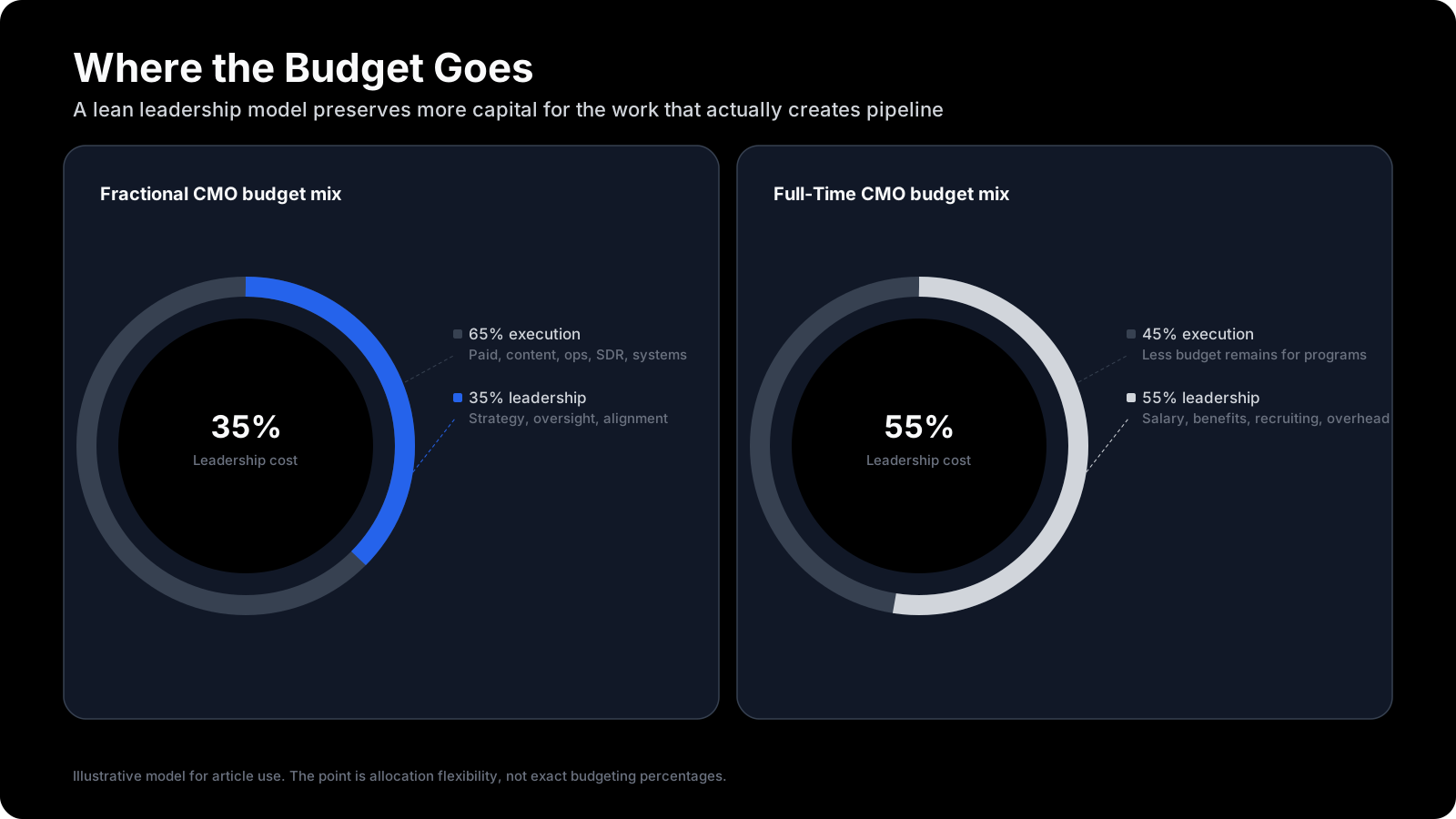
When 40–60% of a marketing budget goes to leadership compensation, less remains for the channels, tools, and programs that produce pipeline. A fractional model frees that capital for execution.
The real comparison: what does $300K buy you in each model?
Full-time CMO: one leader, ramping for six months, building infrastructure from scratch
Fractional CMO + execution budget: strategic leadership plus the demand generation investment to actually run programs
The second model produces pipeline faster. For most companies under $30M in revenue, that math is not close.
How This Fits Into Your GTM System
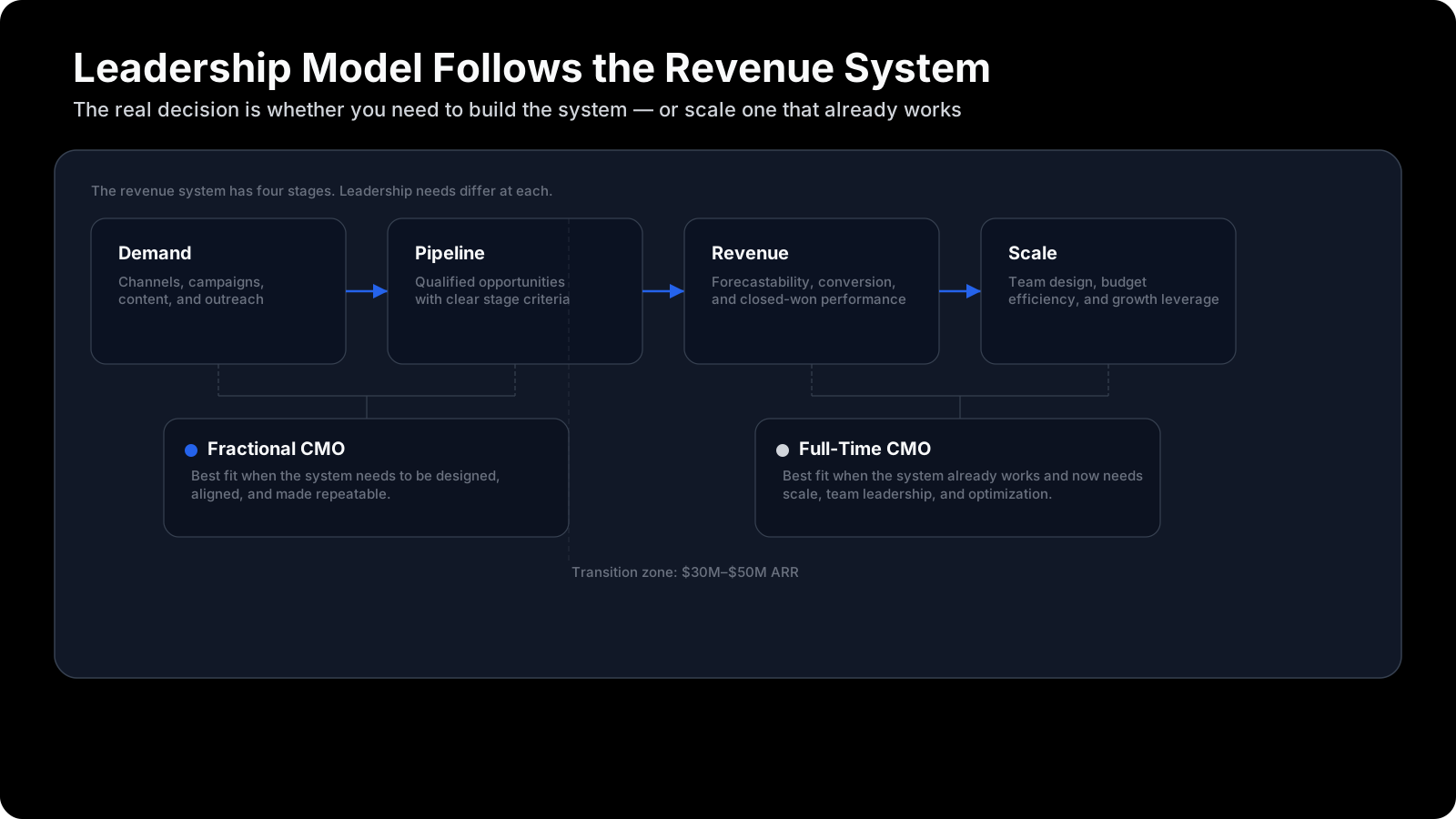
This isn't a standalone decision. Marketing leadership sits on top of the entire revenue architecture:
TAM analysis defines your market ceiling and opportunity size
ICP definition determines who converts and who wastes resources
GTM strategy defines how you reach and win your market
Marketing leadership owns all of it — the system design, the execution, and the revenue accountability.
If that system doesn't exist: fractional builds it. If that system exists: full-time scales it.
The model follows the system state. Not the other way around.
Bottom Line
If your pipeline isn't predictable:
→ You don't need more marketing. → You need better marketing leadership.
The question isn't fractional vs full-time as an abstract preference. It's whether your business is in a build phase or a scale phase — and whether the economics justify locking in a $400K+ annual commitment to find out.
For most B2B companies between $1M and $30M in revenue, fractional is not the compromise. It is the correct structural decision.
Frequently Asked Questions
What does a fractional CMO actually cost?
Most fractional CMO engagements run $5,000–$15,000/month depending on scope, hours, and experience level. Annualized, that's $60,000–$180,000 — versus $300,000–$600,000+ fully loaded for a full-time hire including salary, benefits, equity, and recruiting fees.
At what revenue stage should I consider a full-time CMO?
Generally $50M+ in revenue, when a functioning GTM motion is in place, when you have a marketing team that needs senior leadership, and when the business needs organizational coordination at scale — not system building from zero.
Is a fractional CMO less committed than a full-time hire?
Not meaningfully. A fractional CMO is engaged against specific outcomes — pipeline, GTM clarity, revenue system development. The accountability is to results, not hours. Most fractional engagements move faster than full-time onboarding because they start executing immediately.
Can a fractional CMO manage a marketing team?
Yes. Fractional CMOs regularly lead internal teams, manage agency relationships, and drive cross-functional alignment with sales. The difference is they do it without the overhead of full-time employment.
What's the difference between a fractional CMO and a marketing consultant?
A consultant advises and delivers discrete projects. A fractional CMO operates — they own pipeline, drive strategy, manage teams, and are accountable to revenue outcomes. It's an embedded leadership role, not a project engagement.
When does fractional stop making sense?
When the business has a functioning marketing organization that requires full-time leadership presence, organizational management at scale, and board-level visibility. At that stage, a full-time CMO earns their overhead through organizational leverage — not through execution speed.
Fix your pipeline. Not your org chart.
Whether you need a strategic consulting engagement to fix the system, or fractional marketing leadership to own it ongoing — Apex GTM helps B2B companies build pipeline strategy and execution that converts. No fluff. No vanity metrics.