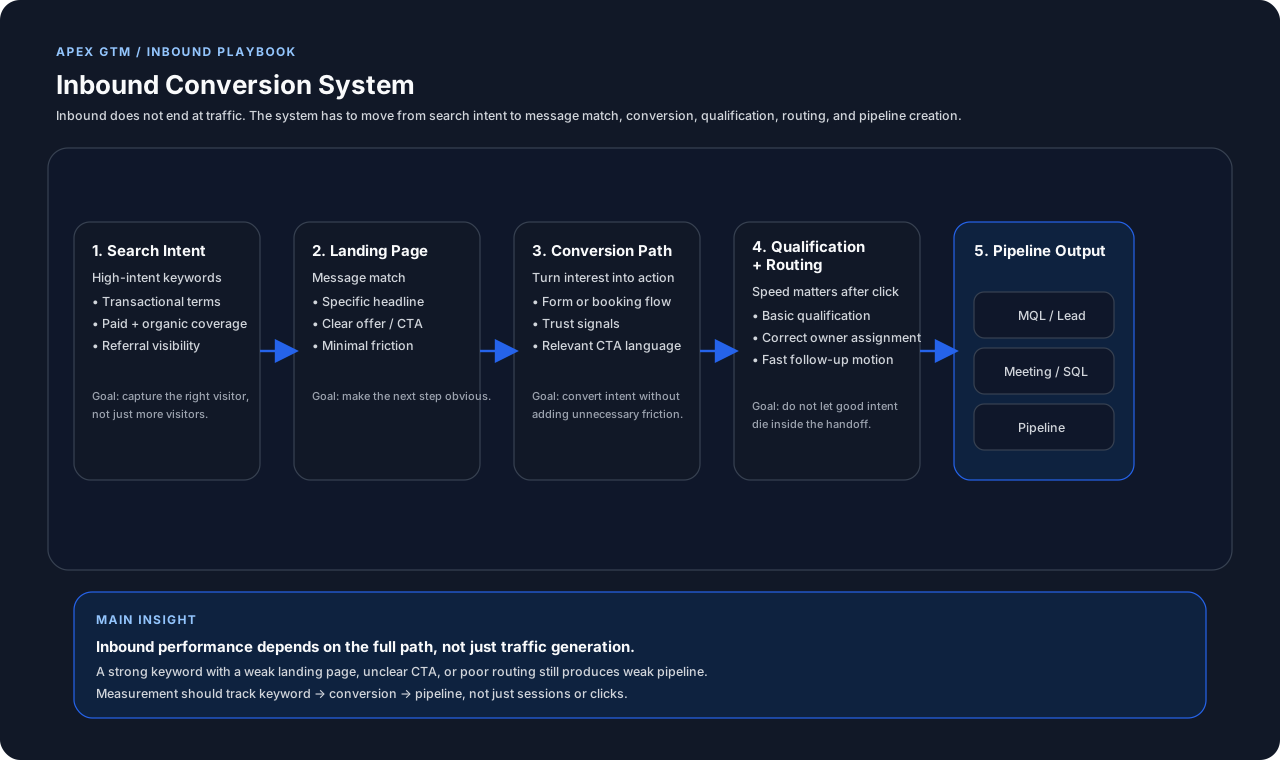
- Most B2B inbound programs generate traffic. Very few generate pipeline. The gap is architecture, not effort.
- Inbound pipeline comes from capturing commercial intent — buyers actively searching, comparing options, evaluating vendors.
- Transactional keywords convert. Informational keywords build awareness. Most programs get this backwards.
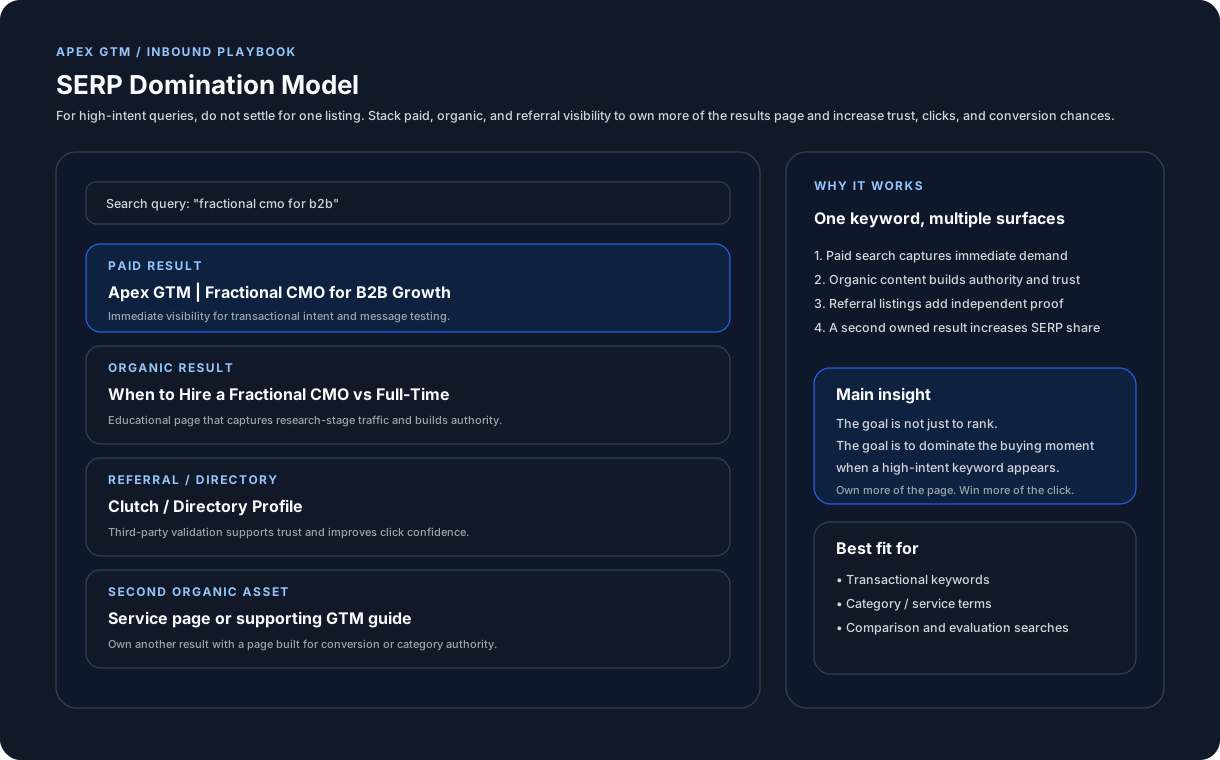
- SERP domination means owning multiple placements — organic, paid, comparison pages, third-party review sites.
- Traffic without conversion is wasted. Landing page architecture determines whether inbound produces pipeline or just visits.
- When built correctly, inbound is one of the most durable, compounding pipeline assets a B2B company can own.
Most B2B inbound programs generate traffic. Very few generate pipeline.
The gap isn't content quality or ad spend. It's architecture.
Teams build inbound programs optimized for the wrong outcomes — organic sessions, MQL volume, content engagement — without asking whether any of that activity converts into qualified sales conversations.
Inbound works when it captures demand at the moment of commercial intent. When a buyer is actively searching for a solution, comparing vendors, or evaluating categories — that's where inbound pipeline actually comes from. Everything else is brand awareness at best.
This playbook is about building an inbound system designed to create predictable pipeline, not traffic reports.
Inbound Is a Pipeline Strategy, Not a Traffic Strategy
Most inbound marketing is measured by the wrong things:
- organic sessions and page views
- time on page and bounce rate
- content downloads and social shares
- MQL volume without conversion quality
None of these are pipeline.
The inbound that converts into qualified opportunities shares one characteristic: it intercepts buyers at the moment they are actively looking for a solution. That's a fundamentally different moment than general awareness or educational content consumption.
Understanding your Ideal Customer Profile determines which buyer searches you should be targeting. Without ICP clarity, keyword strategy becomes unfocused — capturing traffic that was never going to convert.
Inbound operates in demand-capture mode. It intercepts buyers who already know they have a problem and are actively evaluating how to solve it. That distinction — between creating demand and capturing it — is what determines whether inbound produces pipeline or just activity.
The inbound that builds pipeline is not the inbound that builds traffic. Optimizing for the wrong metric is the fastest way to spend budget without generating revenue.
Start with Commercial Intent: The Keyword Pyramid
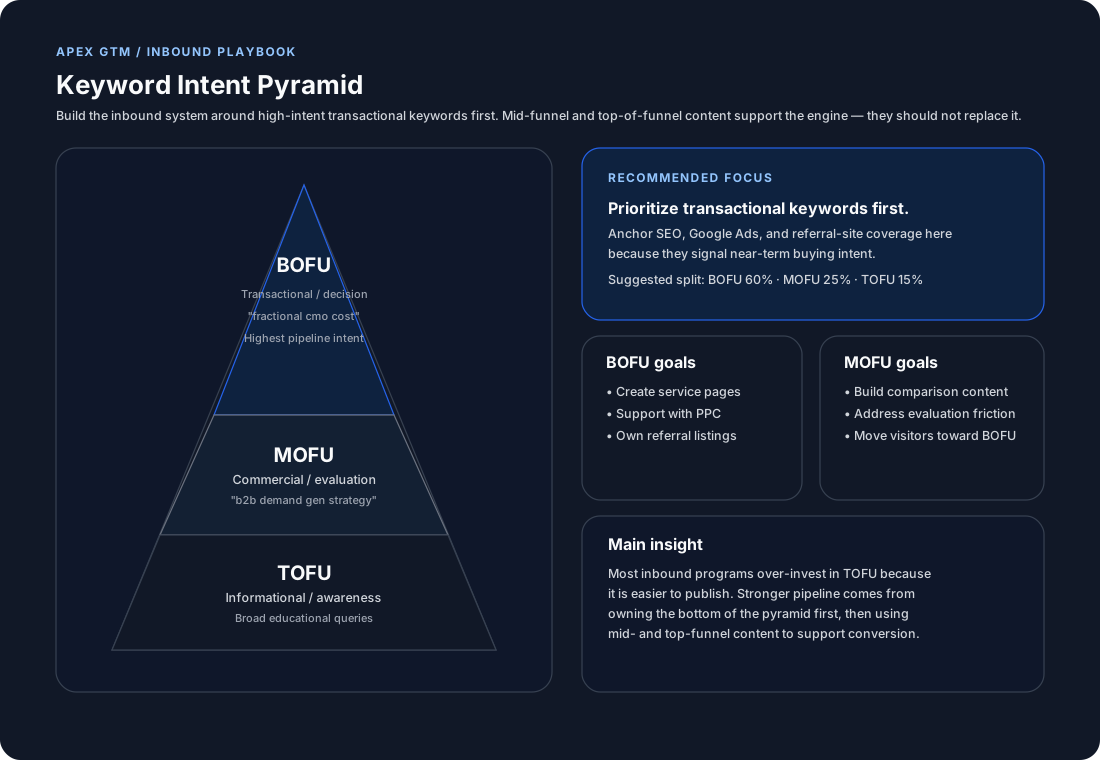
Not all organic search traffic is created equal. The traffic that converts into pipeline comes from a specific tier of the keyword pyramid — and most B2B inbound programs are optimized for the wrong tiers.
Three keyword intent levels determine what your organic and paid investment actually produces:
Informational Intent
Buyers researching topics, building knowledge, understanding problems. High volume, low conversion. Good for building brand awareness over time, but rarely produces qualified pipeline directly.
Commercial Intent
Buyers researching solutions, comparing options, evaluating vendors. Lower volume, much higher conversion. Category terms, comparison pages, "best [solution]" queries. This is where inbound pipeline is built.
Transactional Intent
Buyers actively looking to engage, request a demo, or contact a vendor. Lowest volume, highest conversion. Brand terms, direct solution searches, vendor-specific queries. Every seat at this table should be owned.
Most B2B inbound programs are heavily weighted toward informational content. They publish educational articles, guides, and thought leadership — and then wonder why organic traffic doesn't convert into pipeline.
A pipeline-first inbound program reverses that allocation. Commercial and transactional intent keywords get the investment. Informational content supports brand presence, but it's not the pipeline driver.
SERP Domination: Own the Search Landscape
Ranking for one keyword on one page is a start. Dominating the SERP means your buyer finds you everywhere they look — regardless of what angle they're searching from.
When a buyer searches your category and encounters your brand in multiple placements, the credibility and familiarity that creates is compounding. By the time they click through, you're already the front-runner.
SERP domination means building presence across:
- Organic listings — owned content ranking for category and comparison terms
- Paid search — covering branded, competitor, and category terms your organic strategy doesn't yet own
- Featured snippets and AI overviews — structured answers that capture attention above organic results
- Competitor comparison pages — capturing buyers who are actively comparing you against alternatives
- "Best [category]" and "[tool] alternatives" pages — appearing in the research phase before buyers narrow their shortlist
- Third-party review and listing sites — G2, Capterra, and category-specific directories where buyers validate decisions
- Referral and partner visibility — appearing through trusted sources buyers already use
The size of your addressable market determines how much of this SERP landscape is worth owning. A narrow ICP means focused SERP investment. A broad TAM without ICP clarity leads to inbound spend that never converts.
Google Ads for B2B Pipeline
Paid search is the fastest inbound channel for generating targeted pipeline. It doesn't compound the way organic does — but it reaches buyers immediately and with precise intent targeting.
Most B2B paid search underperforms because it runs too broad. Budget gets consumed by informational searches that were never going to convert into qualified conversations.
A pipeline-first paid search strategy looks different:
Restrict to high-intent keywords only
Bid on branded, competitor, and category terms. Use negative keyword lists aggressively to block informational queries. If someone searching a term isn't close to a buying decision, they shouldn't be consuming your budget.
Align ad copy with landing page offer
The message in the ad and the message on the landing page should be identical in positioning. Disconnects between ad copy and landing page destroy conversion rates and Quality Score simultaneously.
Structure campaigns by intent tier
Branded, competitor, and category terms should each have their own campaigns with distinct budgets, bid strategies, and landing pages. Mixing intent tiers in a single campaign muddies performance data and optimization signals.
Measure against pipeline, not clicks
CTR and CPC are operational metrics, not performance metrics. Track cost-per-opportunity and cost-per-qualified-conversation. If you cannot attribute paid search spend to pipeline, you cannot manage it to pipeline outcomes.
Landing Page Conversion
Traffic without conversion is marketing spend with no return. Landing page architecture determines whether your inbound investment produces pipeline or just visits.
Most B2B landing pages fail for the same reasons:
- unclear value proposition above the fold
- weak or buried call to action
- too much friction on the form (too many fields, insufficient trust signals)
- generic messaging that doesn't match the searcher's specific intent
- no social proof or validation that reduces purchase risk
What a high-converting B2B landing page actually contains:
- A headline that matches the intent of the search query — the visitor should see their problem or goal reflected immediately
- A specific offer — not "learn more," but a concrete next step: demo, consultation, audit, assessment
- Credibility signals — customer logos, case study references, and proof of results relevant to the buyer's situation
- Minimum required fields — every additional form field reduces conversion rate; ask only for what the sales process actually requires
- No navigation — remove the nav bar. Landing pages should convert, not browse.
Conversion optimization is not a one-time exercise. It is a continuous testing discipline that most B2B marketing teams underinvest in relative to the return it produces.
Doubling conversion rate is functionally the same as doubling traffic. Most B2B teams spend 10x more optimizing for traffic than for conversion.
Common Inbound Mistakes
The same failures appear consistently across B2B inbound programs that generate traffic but not pipeline:
Optimizing for traffic, not conversion
Traffic metrics look good in a dashboard but don't produce revenue. If the inbound program isn't measured against qualified conversations and pipeline created, it will optimize itself away from what matters.
Publishing informational content when you need transactional content
Most B2B content teams prioritize educational content because it's easier to produce and easier to rank for. The problem is that informational traffic rarely converts. The content that drives pipeline is the content targeting buyers who are close to a decision.
Running paid ads without aligned landing pages
Sending paid traffic to a generic homepage or a landing page with a mismatched message destroys conversion rates and burns budget. Ad-to-page alignment is foundational, not optional.
Treating all leads as equal
Not all inbound leads have the same intent signal. A buyer who searched a transactional keyword and submitted a demo request is not the same as someone who downloaded a whitepaper. Routing and qualification logic should reflect intent, not just form submission.
No attribution visibility
Not knowing which inbound channels produce qualified pipeline — as opposed to just leads — makes it impossible to invest in what works. Attribution is not a reporting luxury; it's the feedback loop that makes inbound improvable.
No ICP alignment in keyword strategy
Ranking for keywords that attract the wrong buyer profile produces high traffic and low conversion — and clogs the top of the funnel with leads that will never close. Keyword strategy should be derived from ICP, not from search volume.
How Inbound Connects to Pipeline
A well-built inbound system is not a lead generation machine. It is a pipeline creation engine that works on its own schedule — compounding over time and producing qualified conversations continuously.
The system has five layers that need to work together:
Intent capture
Organic and paid search targeting commercial and transactional keywords — intercepting buyers at the moment of active research.
Landing page conversion
High-converting, intent-matched pages that convert traffic into qualified inquiries with minimal friction.
Lead qualification
Routing logic and qualification criteria that separate high-intent prospects from early-stage awareness leads before they reach sales.
Sales handoff
A clean, fast handoff protocol that converts qualified inquiries into sales conversations without friction or delay. Response time within the first hour matters significantly in B2B.
Attribution and feedback loop
Closed-loop attribution that connects which channels, keywords, and pages produce closed revenue — not just leads. This is what makes the system improvable over time.